Yoga Nidra: Guided Relaxation Practice
A lying-down guided relaxation you can use as a structured rest break during the day. Educational wellness content — not medical treatment.

A lying-down guided relaxation you can use as a structured rest break during the day. Educational wellness content — not medical treatment.
Yoga Nidra translates as "yogic sleep," yet you remain awake on the edge of consciousness — aware enough to follow guidance, relaxed enough that the body stops holding tension. You lie in Savasana (corpse pose) while a teacher's voice leads you through systematic stages: settling, breath awareness, body rotation, visualization, and gentle return.
The practice traces to tantric traditions and was popularized in modern yoga by teachers like Swami Satyananda Saraswati. Today it appears in studios, workplace wellness programs, and community education settings because the format is accessible — no flexibility required, no standing postures, just willingness to lie still and listen.
Practitioners often describe Yoga Nidra as deeply restful — a pause that may help them feel more refreshed subjectively. Research is still evolving; some small studies have noted associations with reduced perceived stress in certain groups. Results vary by person, and the practice is not a substitute for adequate nighttime sleep or professional care.
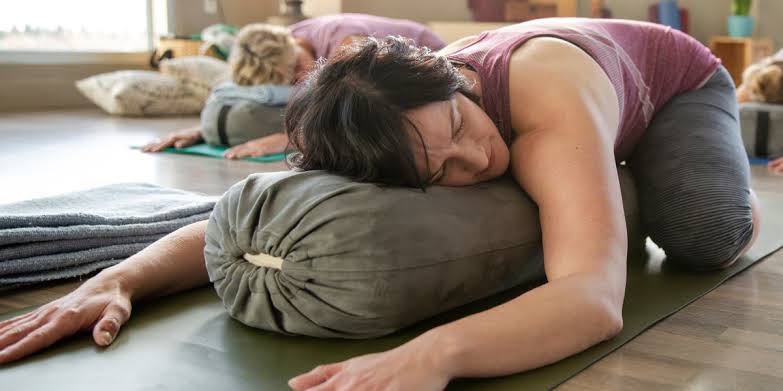
You find a comfortable position and set a short positive intention — a phrase in present tense about how you want to feel or show up. This seeds the subconscious without force.
The guide names body parts in a specific sequence — right thumb, right index finger, and so on. Awareness travels through the body, releasing unconscious gripping.
Attention rests on the natural breath — often counting or observing flow at the nostrils. The mind has a simple anchor.
Some traditions alternate heavy/light or hot/cold imagery to encourage awareness of contrasting sensations during the practice.
Guided images — a peaceful landscape, symbolic objects — engage the right hemisphere and deepen the trance-like state.

Long stretches of focused work can leave the body holding tension — tight shoulders, shallow breath, a sense of being "always on." Taking intentional rest breaks is one way many people counter that pattern during the day.
Some research has explored brainwave patterns during Yoga Nidra, noting rhythms that resemble early relaxation states while participants remain responsive to sound. Findings are preliminary and should not be interpreted as clinical outcomes.
For everyday wellness purposes, the takeaway is practical: you do not always need more stimulation to feel engaged. Sometimes a structured rest break — such as a twenty-minute guided session — may help you return to afternoon tasks with clearer attention. Individual responses vary.
That post-lunch dip is partly circadian and partly accumulated tension. Twenty minutes of guided rest before your hardest afternoon block may help some people return with clearer attention.
Separate work mode from home mode. Practice before dinner to release the accumulated tension of the day without fully falling asleep.
After travel, intense deadlines, or emotionally demanding weeks, a longer forty-five-minute session supports deeper restoration.
Find a quiet space where you will not be disturbed. Lie on a yoga mat or bed with a blanket — body temperature drops during deep relaxation. Use a thin pillow under your head and optionally cover your eyes with a cloth. Headphones help if ambient noise is unavoidable.
Choose a recording from a teacher whose voice feels calming to you. Start with twenty minutes. If you fall asleep, that is fine — your body needed it. With practice, you learn to hover in the balanced state between waking and sleeping.
After the session ends, do not jump up immediately. Wiggle fingers and toes, roll to one side, and sit slowly. Give yourself two minutes before screens or demanding conversations.
Join a Guided Group Session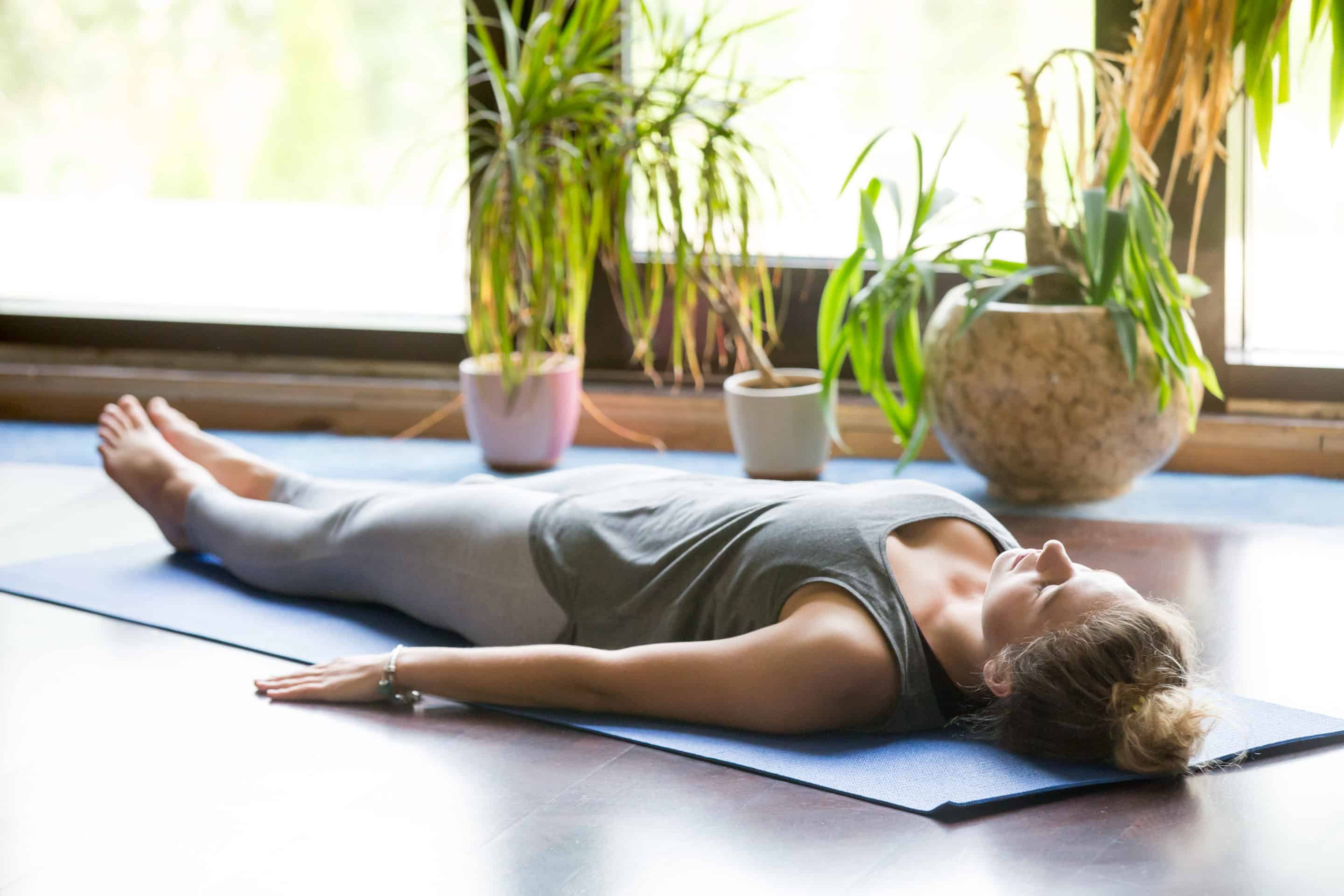
45-minute guided practice. Fee shared before registration. Mat and blanket provided. Virtual option available.
25-minute lunchtime format. Fee shared before registration. Designed as a structured rest break.
Related but distinct. Meditation often involves upright posture and active attention training. Yoga Nidra is lying-down guided relaxation moving toward a hypnagogic state. Both support awareness; the methods differ.
Sleep during Yoga Nidra usually means you need rest. Over time, as sleep debt decreases, you may stay in the balanced state more consistently. There is no failure in falling asleep.
Many practitioners enjoy daily sessions of twenty to thirty minutes. Listen to your body — if you feel groggy afterward, try shorter durations or earlier timing.